360 payments
Why are early loan payments mostly interest?
How a fixed payment is split between interest and principal, a 30-year example with real milestones and what the schedule means for refinancing and selling.
By LendLanding Editorial Team Updated 8 min read
- The clock
- 360 monthly payments
- What it multiplies
- Balance × rate ÷ 12
- One example
- $1,896.20; $1,625 interest
Quick answer
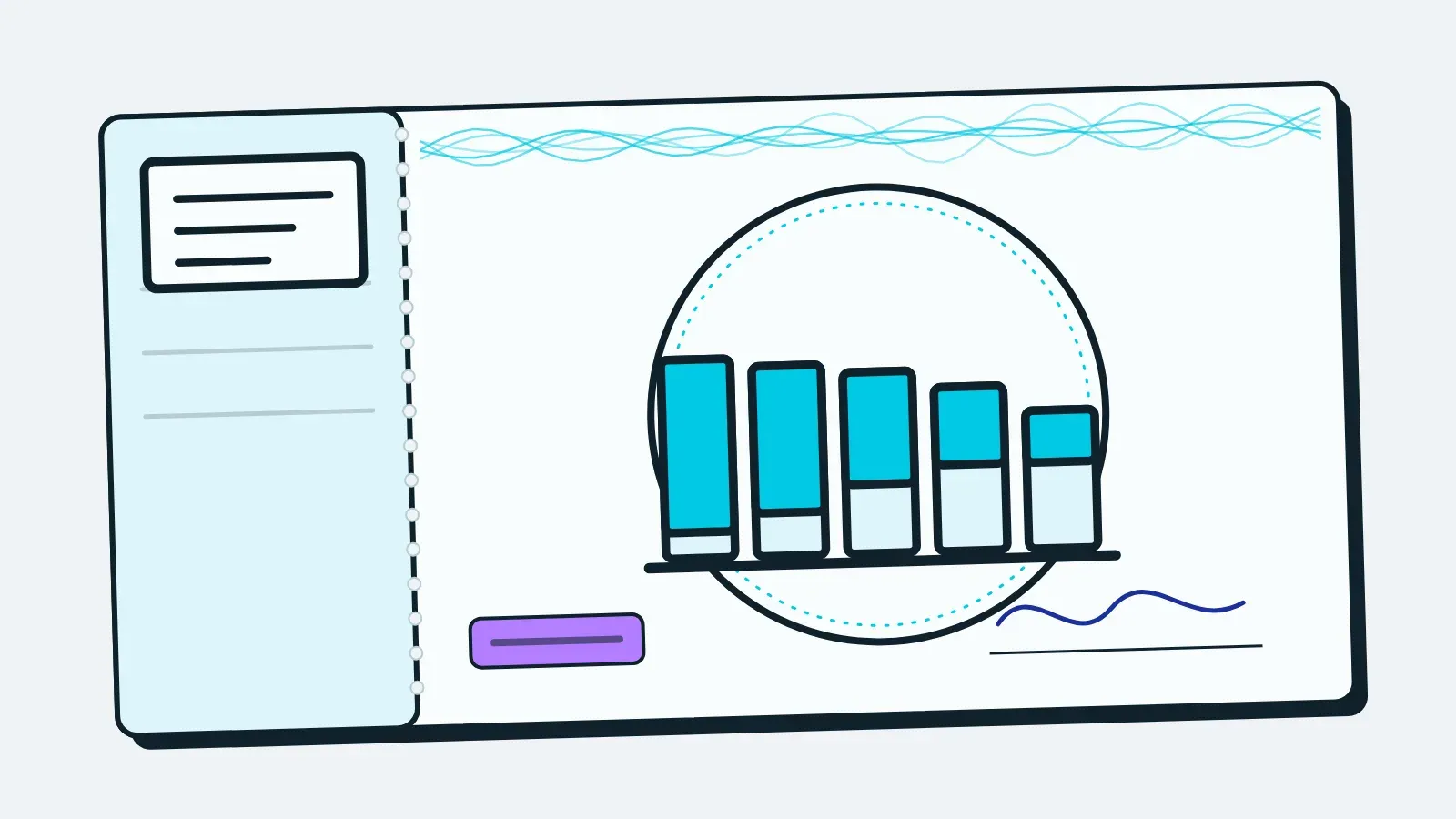
Amortization spreads a loan into equal payments, but each payment splits differently over time. Interest is charged on the balance, so early on, when the balance is largest, most of the payment is interest. On a $300,000, 30-year loan at 6.5% the payment is $1,896.20; in month one, $1,625.00 is interest and $271.20 reduces the balance. After five years the balance is still about $280,833, and over the full term the interest totals about $382,633.
How the split works
In a standard amortizing loan, each month's interest is the current balance times the annual rate divided by twelve. The rest of the fixed payment reduces the balance. Because the balance is smaller next month, so is the interest, and a little more of the next payment goes to principal. The effect compounds over time.
The payment itself comes from a formula that makes the balance reach zero on the last payment. A longer term or a higher rate means a larger share of interest. Use the payoff date calculator to see how a payment shortens or lengthens the schedule on your balance.
A 30-year example
| Month | Interest in the payment | Principal in the payment | Balance after the payment |
|---|---|---|---|
| 1 | $1,625.00 | $271.20 | $299,728.80 |
| 12 (year 1) | $1,608.40 | $287.81 | $296,646.82 |
| 60 (year 5) | $1,523.20 | $373.01 | $280,832.93 |
| 120 (year 10) | $1,380.41 | $515.80 | $254,328.38 |
| 180 (year 15) | $1,182.95 | $713.25 | $217,677.42 |
| 240 (year 20) | $909.90 | $986.30 | $166,995.85 |
| 300 (year 25) | $532.33 | $1,363.87 | $96,912.49 |
After five years of payments totaling about $113,772, the balance has fallen by only about $19,167. The principal share passes the interest share at month 233, a little after year 19. The total interest over 30 years is about $382,633, more than the loan amount.
The figures assume a fixed rate, no taxes or insurance in the payment, and no extra payments. Your Loan Estimate and Closing Disclosure give the real numbers for your loan.
What it means in practice
- Selling or refinancing early. In the first years the balance falls slowly, so equity grows more from the home's value than from payments.
- Shorter terms. A 15-year loan has a higher payment, but far less interest and a faster fall in the balance.
- Extra principal. A payment applied to principal early removes the interest that principal would have earned for the rest of the term. See extra payments and biweekly plans.
- Payoff and per diem. The balance on your statement is principal; the payoff adds accrued interest. See simple interest and per diem.
Shorter terms and different rates
The same method gives very different results with a different term or rate. On a 15-year loan for the same amount, the monthly payment is higher, but the balance falls much faster and the total interest is a fraction of the 30-year figure. A lower rate has a similar effect on a smaller scale: less of each payment is interest from the first month.
A quick comparison before you borrow is useful. Ask for the monthly payment and the total interest at two terms, and decide what monthly payment fits your budget with some room. A payment you can keep paying is worth more than a shorter term you may have to abandon.
If rates fall and you consider a refinance, remember that a new 30-year loan restarts the schedule, so the early years are interest-heavy again. Ask for a term that matches the years left on your current loan, or plan to pay extra, as shown in extra payments and biweekly plans.
How to read your own schedule
- Find your loan terms: balance, rate, term and payment, on the Closing Disclosure.
- Compute month one: balance × rate ÷ 12 is the interest; the rest of the payment is principal.
- Ask for an amortization schedule. The servicer can provide it, and many websites can create one.
- Compare the balance on your statement with the schedule to confirm that payments are applied correctly.
- Check what your payment includes. Many mortgage payments also cover taxes and insurance held in escrow.
If you plan to move or refinance, check the balance and the break-even date before you decide, not only the monthly payment. The first payment timing is explained in the first payment date.
Adjustable rates and recasting
On an adjustable-rate mortgage, the rate and the payment change at set dates, and the schedule is recalculated on the balance remaining at each change. The early-years pattern is similar, but the payment may rise or fall. Read the rate caps and the adjustment dates in your loan papers.
A recast is a one-time recalculation after a large principal payment: the term stays the same, but the monthly payment is lowered to match the smaller balance. Not every lender offers it, and it may cost a fee, so ask.
Why lenders structure loans this way
Level payments are easier to budget and give the lender interest in proportion to the balance outstanding. The structure is neither a trick nor a penalty: it is what interest on a declining balance looks like. The cost shows mostly in how long you hold the loan, which is why the first years matter if you plan to sell or refinance soon.
Questions people ask
Why is so much of my payment interest at first?
Interest is charged on the balance, which is largest at the start. As the balance falls, interest falls and principal grows.
Does an adjustable rate change the split?
Yes. When the rate changes, the payment or the schedule is recalculated on the remaining balance.
Do auto loans amortize the same way?
Yes, in the same way, though over shorter terms, so the early interest share is smaller.
Where can I get my amortization schedule?
From your servicer or in your online account. Many lenders also provide one at closing.
Sources
- Consumer Financial Protection Bureau: what is amortization?
- Consumer Financial Protection Bureau: Regulation Z, 12 CFR 1026.37, content of the Loan Estimate
- Legal Information Institute: 12 CFR 1026.37
Rules checked on November 21, 2026. The example uses a fixed rate and monthly interest; your Loan Estimate, Closing Disclosure and servicer statement give your own schedule.
Related clocks
-
Interest guide
Extra payments and biweekly plans
What extra principal and a biweekly plan do to a 30-year loan, with the numbers.
-
Interest guide
Simple interest and per diem
How daily simple interest works on a loan, with a worked per diem example.
-
Interest guide
The first payment date
Why a loan's first payment is not 30 days after closing and how prepaid interest works.